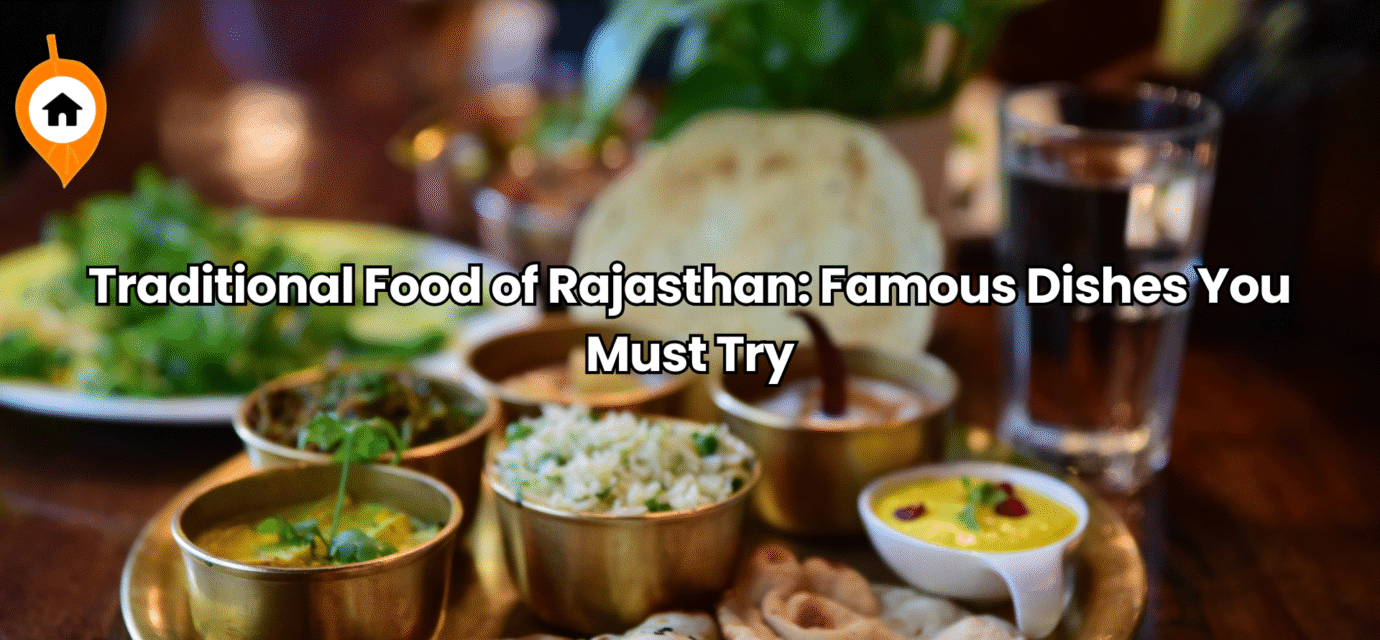
Step into traditional food of Rajasthan, and it doesn’t take long before the air itself feels flavored—cumin, ghee, a hint of red chili that stings the nose just enough. Food here isn’t background. It’s culture, hospitality, survival, and, in many ways, celebration.
The traditional food of Rajasthan developed in a land where vegetables were scarce and water even scarcer. What came out of those challenges? Dishes that are bold, clever, and unforgettable. Meals that last, both in your stomach and your memory.
And if you’re traveling with Solis Nature, you’ll often find food woven right into your stays in Rajasthan, visit Solis Nature to check out amazing property options in Rajasthan. Hosts cooking over clay stoves, thalis served in brass plates, recipes whispered from grandmothers. Food becomes part of the travel story.
Famous Rajasthani Dishes That Locals Swear By

Dal Baati Churma
The crown jewel. Crunchy baati balls baked till golden, cracked open and drowning in ghee, paired with spiced dal and sweet churma. If Rajasthan had to be described in a single dish, this would be it. People hunting for dal baati churma in Udaipur will find it almost everywhere, from homely joints to lake-view restaurants.
Laal Maas
This one doesn’t whisper—it shouts. Mutton slow-cooked with Mathania red chilies until it burns with flavor. Traditionally made for warriors, today it’s the dish spice-lovers dare each other to finish.
Safed Maas
The gentler cousin of laal maas. Creamy, nutty, and delicate. For those who love meat but can’t take the fiery kick, safed maas is like royalty on a plate.
Gatte Ki Sabzi
Soft gram flour dumplings floating in tangy yogurt curry. Comfort food, Rajasthani style. You’ll find it in homes, weddings, and almost every authentic Rajasthani thali.
Ker Sangri
Imagine the desert serving you lunch. Ker (a wild berry) and sangri (beans) mixed with spice and oil—smoky, tangy, unlike anything else. It may look humble, but this dish is Rajasthan’s identity.
Panchmel Dal
Five lentils blended into one dish. Nutritious, hearty, and usually paired with baati. Villagers still cook this as a staple, while travelers often find it as part of rajasthani special thali.
Bajre Ki Roti with Lehsun Chutney
Rustic, earthy, and filling. Thick millet bread paired with fiery garlic chutney makes a meal you won’t forget in a hurry. Sometimes, it’s the simplest plates that leave the biggest impressions.
Rajasthani Sweet Treasures
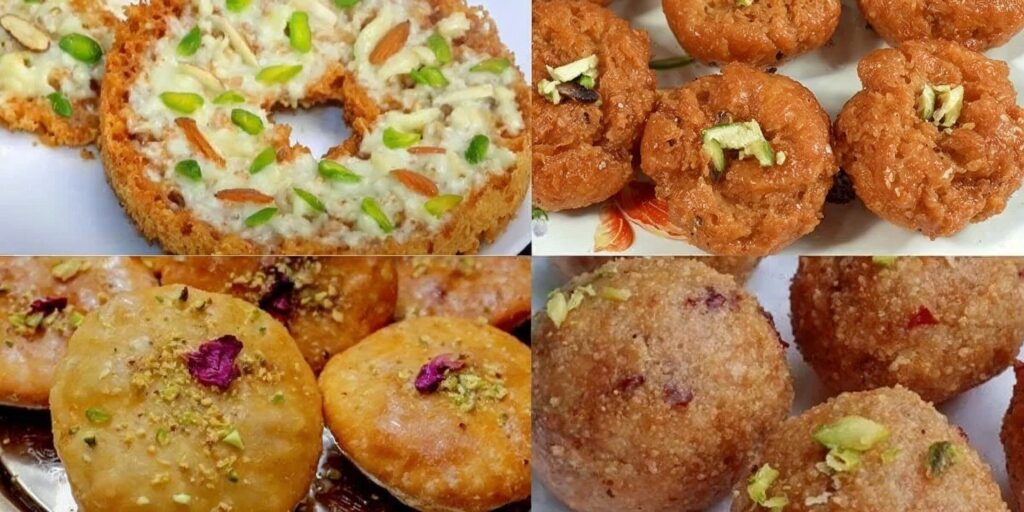
Ajmer Ki Famous Sweet – Sohan Halwa
Dense, nutty, slightly sticky—Ajmer’s pride. This Ajmer ki famous sweet is not just eaten, it’s carried home in boxes, shared with friends, savored for weeks.
Ghevar
Crisp, syrup-soaked discs topped with malai or mawa. Sold everywhere during Teej and Rakhi. Honestly, it’s so photogenic that half the tourists eat it after clicking ten pictures.
Malpua with Rabri
Sweet pancakes dunked in sugar syrup, always paired with thick rabri. Served hot, melting in your mouth before you even realize you’ve eaten three.
Boondi Ladoo
Golden pearls bound with sugar syrup. Found in temples, weddings, and almost every celebration. A simple sweet, yet one that defines childhood memories for many Rajasthani locals.
Rabri
Not exactly a dish, but an indulgence on its own. Thickened milk, reduced patiently till creamy, flavoured with saffron and cardamom. Often served with jalebi—yes, the combination is as sinful as it sounds.
Authentic Food in Jaipur and Udaipur

Jaipur Traditional Food
Street corners here are legends. Pyaaz kachori dripping oil, mirchi bada so spicy it’ll bring tears, and mawa kachori so sweet you’ll forget the calories. Anyone looking for authentic Jaipur food knows Johri Bazaar or the lanes near Hawa Mahal never disappoint. If you are confused about where to stay in Jaipur, Solis Nature got you covered.
Authentic Rajasthani Food in Udaipur
Udaipur’s food scene is slower, calmer. Heritage restaurants around City Palace serve thalis overlooking Lake Pichola. For many, this is where they taste the best authentic Rajasthani food in Udaipur, especially laal maas with bajra roti as the sun sets over the water.
Why Rajasthani Cuisine Hits Different
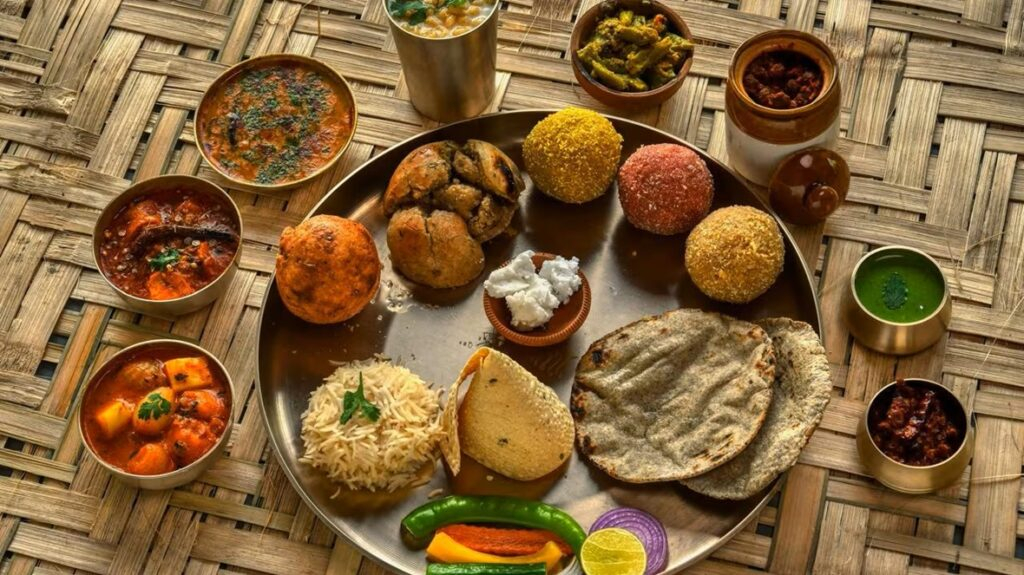
The food here is about balance. Fire and cream. Scarcity and abundance. Desert roots and royal feasts. One plate might be earthy millet roti with garlic chutney. The next, an indulgent spread with silver bowls filled with ghee-rich curries.
And Solis Nature? They bridge that gap for travelers. By connecting guests with local hosts, they make sure you’re not just eating at restaurants—you’re sharing home-cooked meals, hearing stories, and tasting food that never makes it to glossy menus.
Final Bite – Rajasthan’s Food Is Its Heart
It’s hard to leave Rajasthan without carrying flavors home. Ghevar wrapped in boxes, laal maas still tingling on the tongue, ker sangri reminding you of the desert wind. If your belly is full with delicious Rajasthani food then check out Top 15 Forts and Palaces in Rajasthan you must visit once in a lifetime.
The famous Rajasthani dishes aren’t just about what’s served—they’re about how they’re served. With warmth, with generosity, with the belief that a guest is God. And when you travel with Solis Nature, you’re not just ticking off dishes. You’re sitting at family tables, eating recipes handed down generations, living the story Rajasthan tells best—through food.
FAQs on Traditional Rajasthani Food
1. Why is Rajasthani cuisine so heavy on lentils, ghee, and dried foods?
Because the desert shaped it. Fresh vegetables are scarce, water is precious, and perishables don’t last long in arid heat. So recipes evolved to use lentils, pulses, dried beans, grains, dairy, and long-lasting ingredients. One Reddit user put it simply:
“Rajasthan’s cuisine was heavily influenced by its environment … food that could be stored for a long time … dairy was a great way to retain water when cooking.” Reddit
2. What are some “hidden” or less-talked-about Rajasthani dishes that locals swear by?
Beyond the classics, locals often mention:
- Pitod (besan slices in curry) and papad ki sabzi
- Mirchi meti sabji and chakki ki sabzi
- In one travel thread, someone insisted the real Rajasthani food includes “Machhli Jaisamandi, Laal maans, Khadd khargosh.”
3. Is every Rajasthani meal a “thali”? Are there regional differences in what’s served?
Not every meal is a full thali. Home cooking is simpler; many dishes are eaten with roti, dal, or sabzi, depending on the region and season. In tourist or heritage restaurants, thalis become a showcase. In Udaipur, for instance, people ask: “Which is the best place for Rajasthani thali?” and compare local restaurants like Khamma Ghani, Natraj, etc.
4. How spicy is “Laal Maas” really? Will it kill me?
Yes, it’s spicy — but that’s part of the point. Laal Maas is a fiery mutton curry cooked with Mathania red chilies and yogurt. Traditionally, it was part of Rajput warrior cuisine.
That said, many restaurants tone it down for tourists. But if you expect mellow — you might be disappointed.
5. Are sweets a big part of Rajasthani food, or are they “extras”?
Sweets here are not just dessert; they are central, especially during festivals or after big meals. Think ghevar (Teej favorite), malpua + rabri, dal badam chakki (a moong dal & almond fudge), and boondi ladoo. They’re built into the food culture, not afterthoughts.
6. What snack foods or “street bites” should one not miss?
You’ll find loads. A few musts:
- Pyaaz Kachori (onion stuffed, fried pastry)
- Mirchi Bada / Mirchi Vada
- Gatte ki sabzi as savories go
- Local spicy fried items, regionally named (Mirchi meti, tipore, etc.)
7. Do Rajasthani households ever use very simple “emergency” dishes (i.e. when there’s little inventory)?
Yes. Dishes like papad ki sabzi (papad cooked into a curry) are classic fallback options that require almost no vegetables.
Also, dal dhokli (pieces of wheat dough cooked in dal) bridges between minimal and hearty.
8. Are there controversies or criticisms around “tourist Rajasthani food” vs “authentic”?
Absolutely. Many locals and travellers argue that tourist restaurants dilute spice levels, skip ghee, or compromise texture.
One Reddit user in Jaipur commented on hygiene and high prices in some restaurants:
“Hygiene can be a tricky question but I don’t mind eating as long as the food is tasty …” Reddit
Another user insisted that “real Rajasthani food is Machhli Jaisamandi, Laal maans mutton and Khadd khargosh,” implying many popular dishes are watered down or overhyped. Reddit
9. What seasonal changes happen in Rajasthani food?
Because of the climate:
- Winter months see heavier use of millets (bajra, jowar) and dried beans.
- Summer menus often include cooling items like lehsun chutney, more yogurt, lighter breads.
- Sweets like ghevar are tied to festivals such as Teej or Rakhi, so timing matters.
10. How do you tell if a Rajasthani food experience is “real” and not just a tourist façade?
Here’s a quick litmus test:
- Are ghee, whole spices, layers of flavor present?
- Are simple dishes (papad sabzi, gatte) on the menu, not just the “stars”?
- Do locals eat there?
- Is the price reasonable (not overly marked up)?
- Is it crowded at local meal hours?