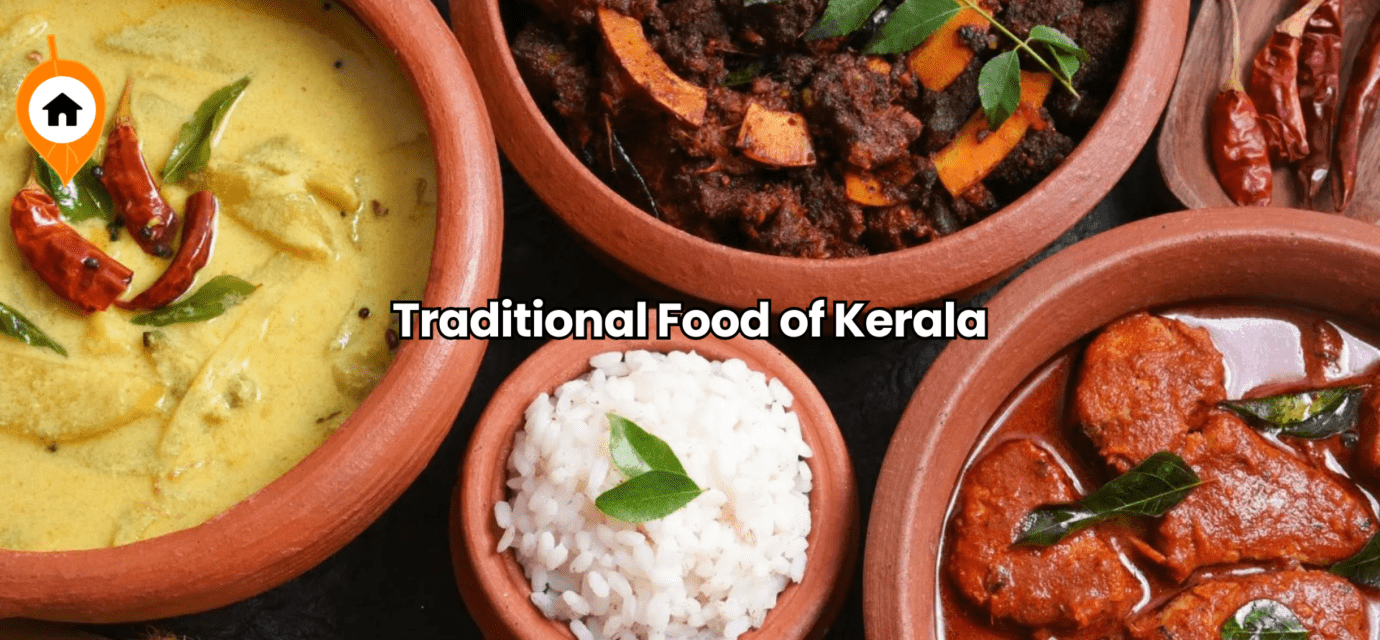
In Kerala, food doesn’t arrive with drama. It doesn’t need applause. It’s already there. In the kitchen before sunrise. In steel lunch boxes wrapped without a second thought. On banana leaves laid out like it’s always been done.
The food of Kerala lives inside daily routine. Quiet. Familiar. Almost invisible until you miss it.
Kerala cuisine grows from repetition, not recipes. People cook the way they were shown. Then the way they remember. Sometimes the two don’t match exactly, and that’s okay. That closeness, that small inconsistency, is what gives the food its comfort. You don’t analyse it. You just know it.
Sadya
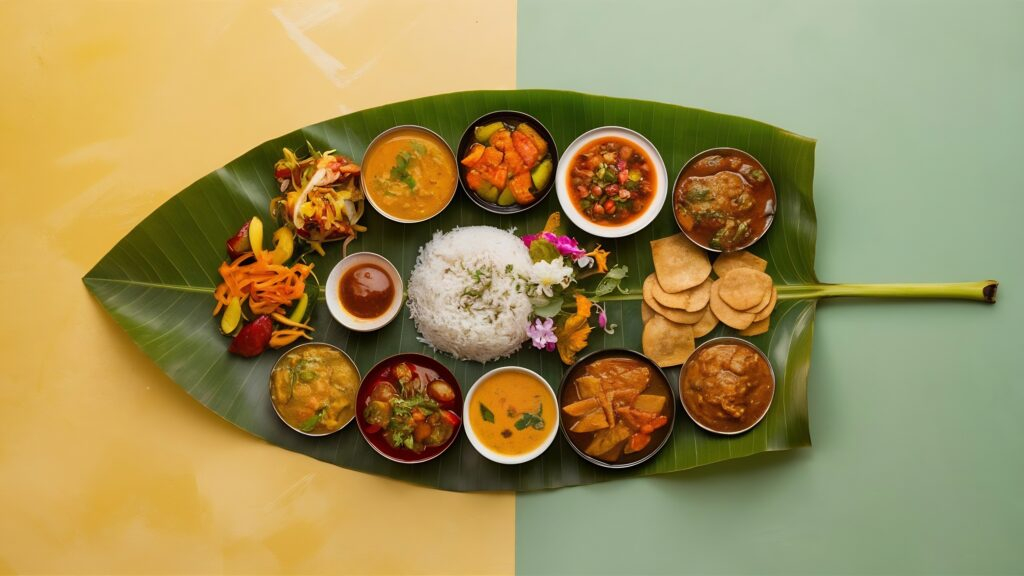
Sadya never walks in uninvited. You feel it coming. The house wakes up differently that day. Someone is already in the kitchen before the sky changes colour. There’s a quiet understanding in the air that today isn’t for shortcuts. It might be a festival, a wedding, a harvest day. Or maybe nothing you can write on a calendar. Just one of those days when everyone agrees, yes, let’s do this properly.
The banana leaf is laid out without much discussion. It always is. Sadya, in many ways, shows how the traditional food of Kerala celebrates things without making a scene. There is abundance, yes, but it’s calm abundance. Nothing feels rushed. Nothing is extra for the sake of it. Everything knows where it belongs.
A Sadya usually includes:
- Steamed rice placed right in the centre, still steaming a little
- Parippu served first, mixed slowly with ghee, because that’s how it’s always done
- Sambar, rasam, and moru curry comes in stages, never together
- Vegetable dishes like avial, thoran, olan, and mezhukkupuratti, quiet but essential
- Pickles, papadam, and Kerala chips around the edges, waiting for their turn
- Different kinds of payasam, because stopping at one never feels enough
People don’t eat Sadya in a hurry. They eat it the way they’ve always eaten it. Servers refill before anyone asks. Plates are adjusted without words. There isn’t much talking while eating, and somehow that feels right. Everyone already knows what’s coming next, what to mix, what to leave for later. This rhythm sits deep inside Kerala cuisine. It’s not about impressing anyone. It’s about familiarity. About doing something the same way, again and again, and finding comfort in that.
Avial
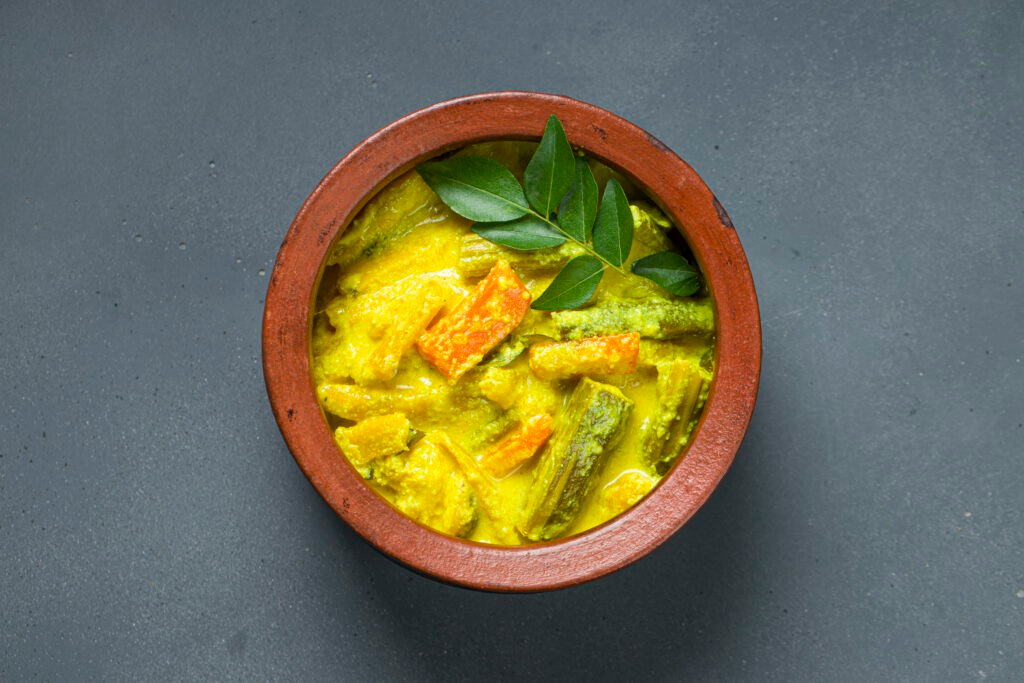
Avial looks simple. Almost suspiciously simple. But it’s not forgiving.
Vegetables are cooked gently with coconut and green chillies, finished with yogurt, curry leaves, and coconut oil. Rush it, and the balance slips. Push it too hard, and it breaks.
Avial is known for:
- Vegetables chosen by season, not mood
- Even cuts so everything cooks at the same pace
- Very little spice
- Coconut that holds everything quietly together
In Malayalam food traditions, avial stands for restraint. It doesn’t demand attention. But when it’s missing, everyone notices. Many popular Kerala dishes behave like this. Soft-spoken, but essential.
Puttu and Kadala Curry
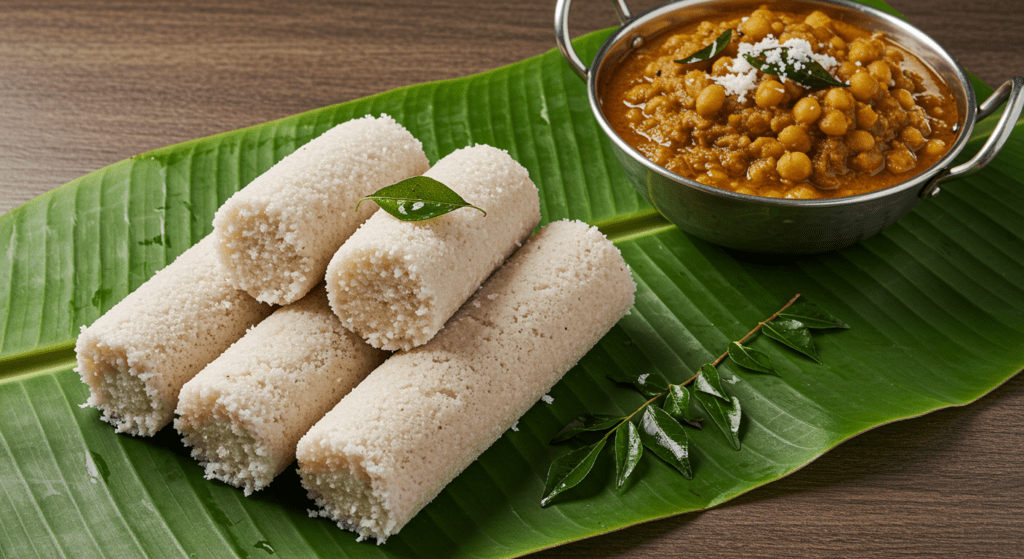
Puttu belongs to mornings. Normal mornings. The kind that don’t need explaining.
Rice flour and coconut are layered and steamed until soft. On its own, puttu stays neutral. Kadala curry carries the weight. Black chickpeas cooked with roasted coconut and spice, thick and grounding.
This meal is often eaten with:
- Kadala curry
- Ripe nendran bananas
- A bit of sugar or ghee, depending on the house
This is the food of Kerala doing its real job. Fuel. Long days. Physical work. School mornings. Meals here are meant to support life, not show off.
Appam and Stew
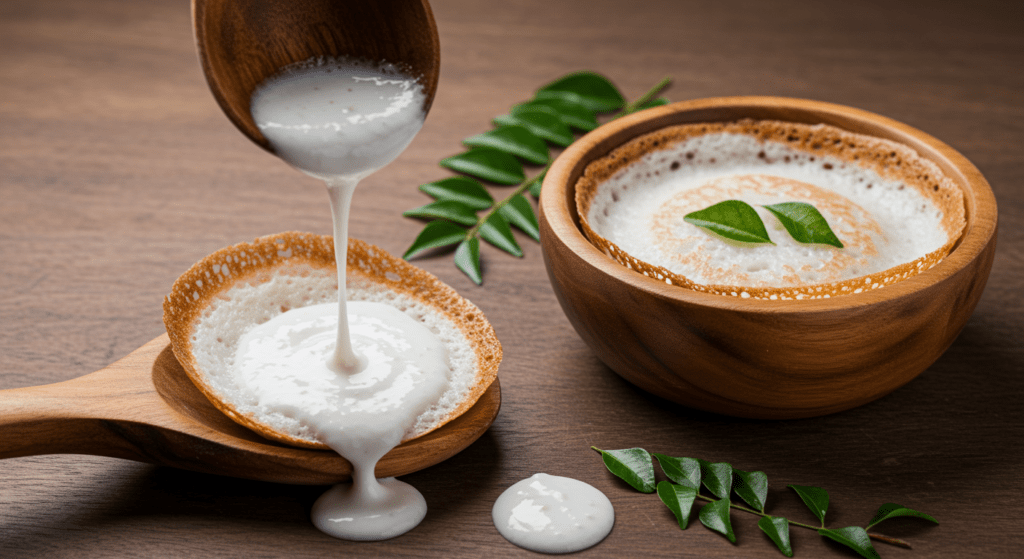
Appam shows how fermentation works quietly in Kerala cuisine. Crisp edges. Soft centre. A faint sourness that fades quickly.
It’s usually paired with:
- Vegetable stew cooked slowly in coconut milk
- Chicken stew with whole spices
- Egg curry with a light, gentle gravy
Together, appam and stew feel calm. Nothing shouts. Flavours settle in, they don’t chase you.
Fish Curry
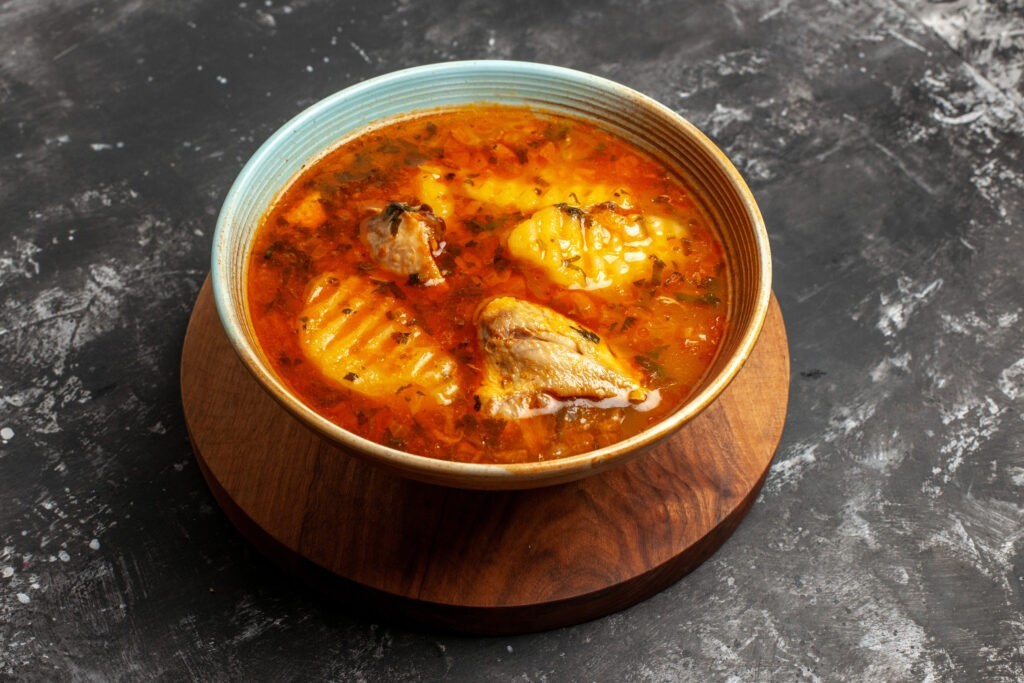
Along the coast, fish curry is everyday food. Every region cooks it differently. Sometimes every home does. Still, it stays constant. It shows up on the table without ceremony and remains one of the famous dishes of Kerala.
Common variations include:
- Tamarind-based red fish curry
- Coconut milk fish curry with mild heat
- Meen moilee with ginger and green chillies
Fresh fish, coconut oil, and curry leaves keep these dishes rooted in Kerala cuisine. Wherever you eat them, they feel known. Almost personal.
Kerala Style Beef Fry
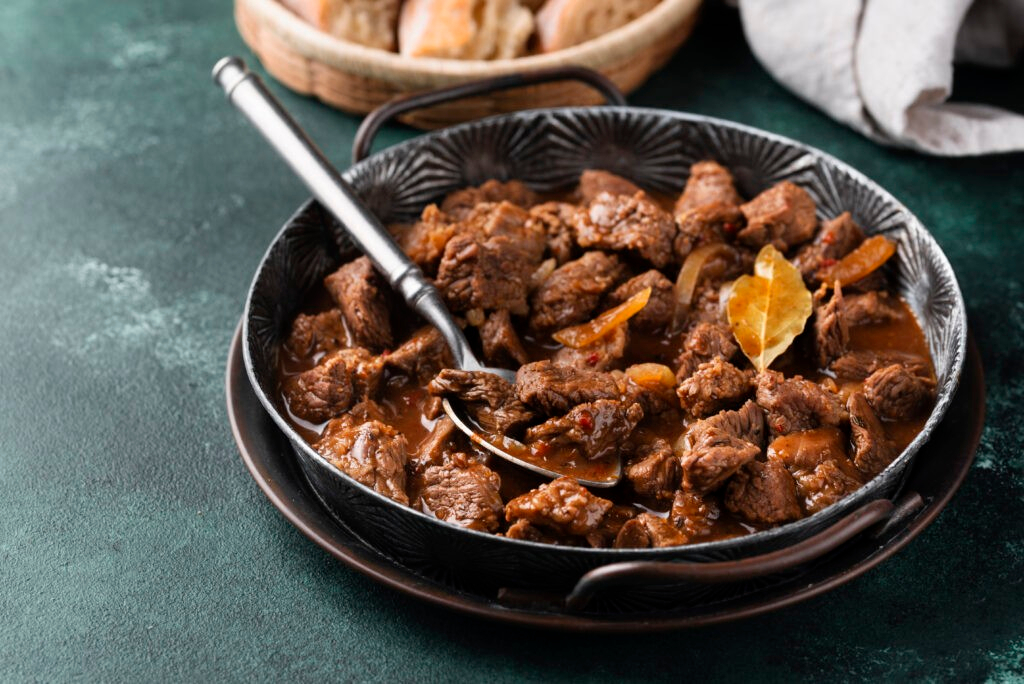
Kerala style beef fry isn’t a statement dish. It’s just food people grew up with.
Beef is cooked slowly until tender, then fried with coconut slices, curry leaves, and shallots until dark and fragrant. The smell alone tells you what day it is.
Usually eaten with:
- Kerala parotta
- Rice and simple vegetable sides
Its popularity comes from repetition. That’s why it’s counted among the most popular Kerala dishes. Familiarity does that.
Chicken Stew
Chicken stew shows the gentler side of Malayalam food. Coconut milk forms the base. Spices like cinnamon, cloves, and pepper stay warm, never sharp.
It’s commonly paired with:
- Appam
- Idiyappam
- Plain bread or rice
It appears on family breakfast tables and festival mornings. People like it because it feels easy. Comforting. Something you don’t have to overthink.
Pazham Pori
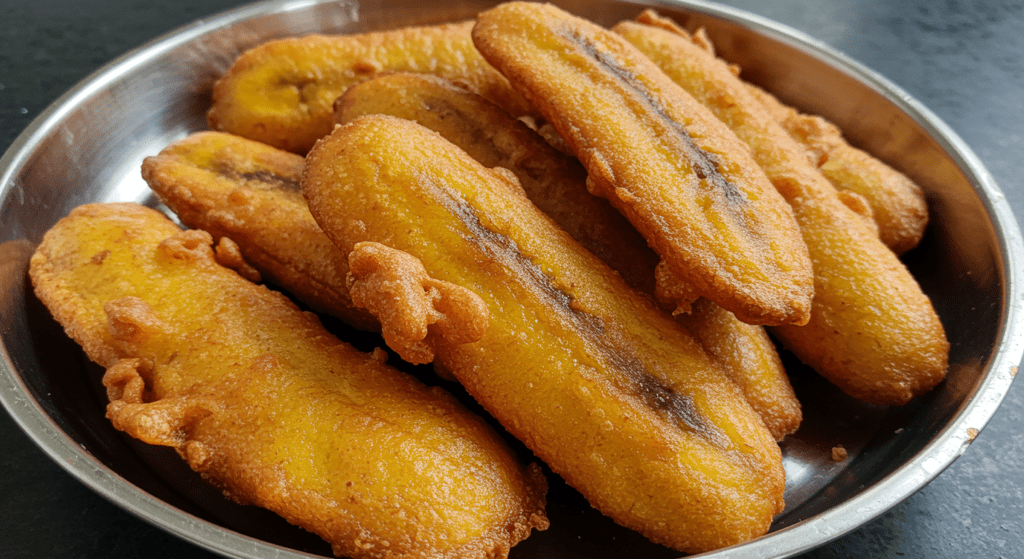
Pazham pori belongs to in-between moments. Rainy afternoons. Tea breaks. Long conversations.
Ripe nendran bananas are sliced, dipped in batter, and fried till golden. Best eaten hot. Always with tea.
People remember pazham pori for:
- A crisp outer layer
- A soft, sweet centre
- The timing of when they ate it
Among famous food in Kerala, pazham pori carries memory more than flavour. Funny thing is, everyone has a story attached to it.
Kerala Chips
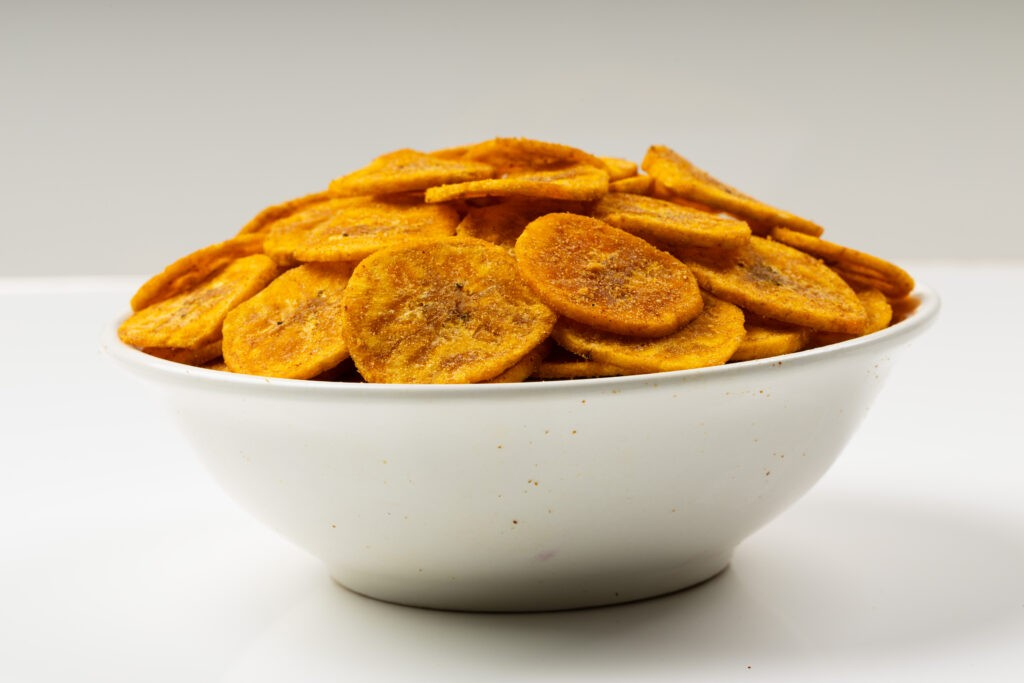
Kerala chips are everywhere. Kitchens. Trains. Road trips. Almost every home keeps them around.Thin slices of raw nendran bananas are fried in coconut oil till crisp. No fuss.
They’re loved for:
- A steady crunch
- Mild seasoning
- That unmistakable coconut oil smell
Kerala chips remain one of the most recognisable forms of Kerala food outside the state. People carry them back like souvenirs, always.
Unniyappam
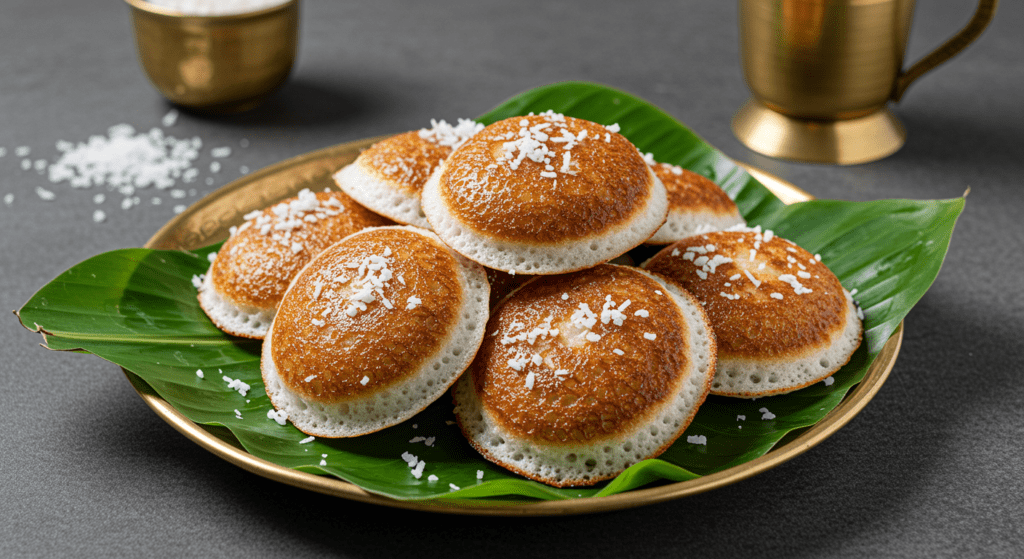
Unniyappam show up when families gather. Temple visits. Festivals. Quiet evenings too.
Made with rice flour, jaggery, banana, and cardamom, they’re small but filling. A little messy sometimes, and that’s fine.
They usually have:
- Soft centres
- Lightly crisp edges
- Gentle sweetness
Sweets in Kerala cuisine avoid excess. Nothing is cloying. Nothing feels heavy.
Payasam
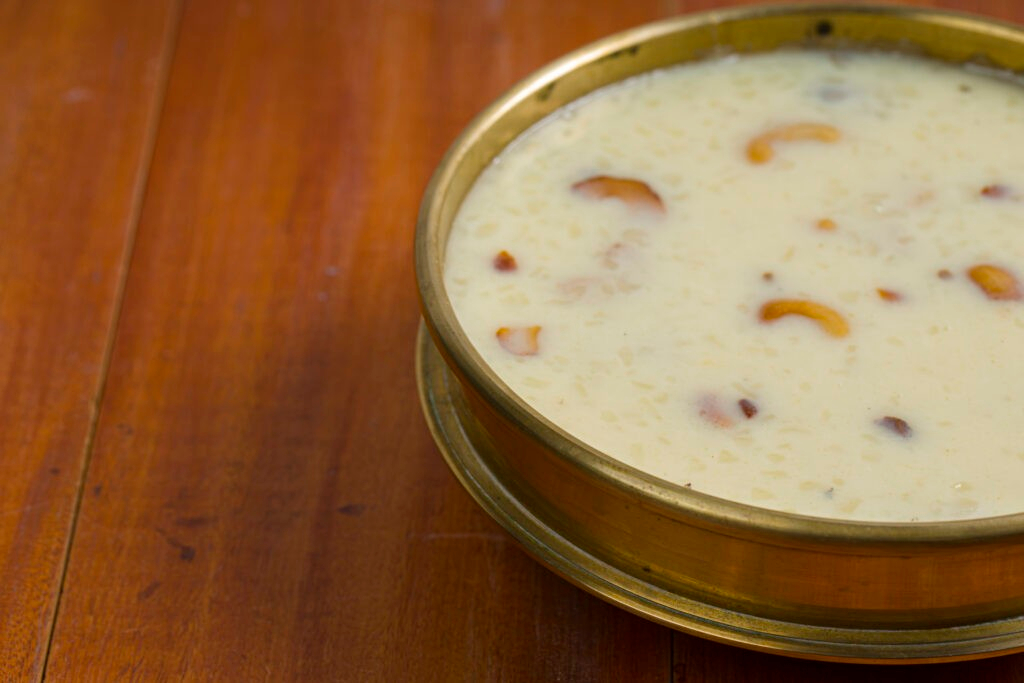
Payasam ends the meal. Always has. No celebration in Kerala feels finished without it.
Common varieties include:
- Ada pradhaman with jaggery and coconut milk
- Palada payasam with milk and rice ada
- Parippu payasam cooked with lentils and jaggery
Each belongs to the traditional food of Kerala in its own way. Families have favourites, and those choices rarely change. People argue about it too, sometimes.
Food, Place, and Everyday Life
Kerala cuisine feels most natural when eaten close to where it comes from. Meals cooked near paddy fields, backwaters, or coastal villages feel grounded. Ingredients arrive fresh. Cooking follows the season.
Stays near forests, plantations, and water bodies support this rhythm. Platforms like Solis Nature reflect this connection by offering properties rooted in natural surroundings, where the food of Kerala continues as part of everyday life rather than something staged.
Readers curious about how food connects with landscape can explore our complete Kerala travel and culture guide here. Those planning slower travel may also enjoy discovering authentic stays in Kerala, where meals follow the same rhythm found in local homes.
What Defines Kerala Cuisine
Across regions, certain habits stay steady in Kerala cuisine:
- Rice as the base of most meals
- Coconut used grated, ground, and as milk
- Curry leaves and mustard seeds for aroma
- Spices used with care, not excess
These patterns keep Kerala food familiar, even as it shifts quietly. Ask someone about their daily meal and the answer changes fast. That’s usually where hidden food stories come out.
Regional Variations Within Kerala Food
At its heart, the base stays the same. Rice on the stove, coconut within reach, cooking shaped by habit more than choice. But once you start moving around, the food begins to change without making a fuss about it.
The food of Kerala shifts with the land and the mood of the place. Near the sea, flavours feel sharper and more restless. In the hills, meals slow down, richer and more patient. Sometimes the difference is small, almost missed, but it’s there.
Talk about food specialities of each Kerala district and the conversation turns emotional very quickly. Someone will defend their version like it’s family.
Northern Kerala, especially Malabar, leans into bold spice and deep gravies that stay with you. Central Kerala carries Christian influences, stews and meat dishes cooked slowly, filling the house with familiar smells.
Southern Kerala feels lighter, often vegetarian, letting coconut do the work. That’s why popular Kerala dishes feel known the moment they arrive, yet still feel like they belong somewhere specific.
Everyday Cooking in Kerala Homes
Home kitchens are where Malayalam food actually lives. Cooking is guided by memory more than measurement. Some days are careful. Some are rushed. Both count.
A typical home meal usually includes:
- Freshly cooked rice
- One curry, often coconut-based
- One vegetable preparation like thoran
- Pickle and papadam
Coconut is grated daily. Curry leaves are picked fresh. Leftovers are reused thoughtfully. These habits keep Kerala food practical and grounded.
Conclusion
The traditional food of Kerala lasts because it fits into daily life without effort. It feeds families, marks moments, and changes slowly. Rooted in land, habit, and memory, Kerala cuisine remains steady, comforting, and unmistakably its own.
Frequently Asked Questions (FAQs)
1. What defines the traditional food of Kerala?
The traditional food of Kerala is defined by rice-based meals, coconut in many forms, seasonal vegetables, and restrained use of spices. These habits shape everyday Kerala cuisine across homes and regions.
2. What are the most famous dishes of Kerala?
Some famous dishes of Kerala include Sadya, puttu and kadala curry, appam and stew, fish curry, Kerala style beef fry, pazham pori, Kerala chips, and payasam.
3. Is Kerala cuisine very spicy?
Kerala cuisine is flavourful but not always spicy. Most Kerala food focuses on balance, using spices for aroma and warmth rather than strong heat.
4. What is a traditional Kerala Sadya meal?
Sadya is a vegetarian feast served on a banana leaf during festivals and celebrations. It reflects the traditional food of Kerala through rice, vegetable dishes, curries, and payasam served in a fixed order.
5. Why is fish curry important in Kerala food?
Fish curry is central to Kerala food because of the state’s long coastline and backwaters. It is a daily staple and one of the most famous foods in Kerala homes.
6. What do people in Kerala usually eat for breakfast?
Common breakfast dishes in Kerala include puttu, appam, idiyappam, and dosa. These are eaten with curries or stews and form a key part of everyday Malayalam food.
7. What are popular snacks in Kerala cuisine?
Popular Kerala snacks include pazham pori, unniyappam, and Kerala chips. These foods are commonly eaten with tea and are tied closely to daily routines.
8. Does Kerala food change across different regions?
Yes, the food of Kerala varies by region. Malabar prefers richer gravies, central Kerala shows Christian influences, and southern Kerala leans towards lighter vegetarian dishes.
9. Why is coconut used so widely in Kerala cuisine?
Coconut is a staple ingredient in Kerala cuisine because it grows locally and suits the climate. It is used as grated coconut, coconut milk, and oil in both vegetarian and non-vegetarian Kerala food.
10. Is Kerala food considered healthy?
Yes, Kerala food is often considered healthy when eaten traditionally. Fresh ingredients, balanced meals, and home-style cooking support everyday nutrition in Kerala cuisine.