

Jaisalmer, often known as the Golden City of Rajasthan, rises quietly from the Thar Desert, and feels like it has learned patience from the land around it. Built almost entirely of golden sandstone, it changes colour through the day—pale in the morning, warm by afternoon, and glowing softly once the sun begins to dip.

Jaisalmer is less about sightseeing and more about noticing. The best places to visit in Jaisalmer are not always the ones you photograph immediately; they are the ones that stay with you long after you’ve left.
Why Jaisalmer Feels Unrushed
Life here follows the desert’s lead. Mornings begin early, afternoons slow everything down, and evenings gently bring people back outside. Instead of traffic and noise, there’s movement that feels intentional.
- Streets narrow enough to walk comfortably
- Stone buildings that hold the day’s warmth
- Shops opening without urgency
- Conversations happening at doorsteps
- A city that still prefers walking over wheels
The most comfortable months to visit are from October to March. Days are mild, nights are cool, and the city feels at ease. Summers are intense and best avoided unless you’re accustomed to desert heat.
Jaisalmer Fort: Not a Monument, but a Neighbourhood
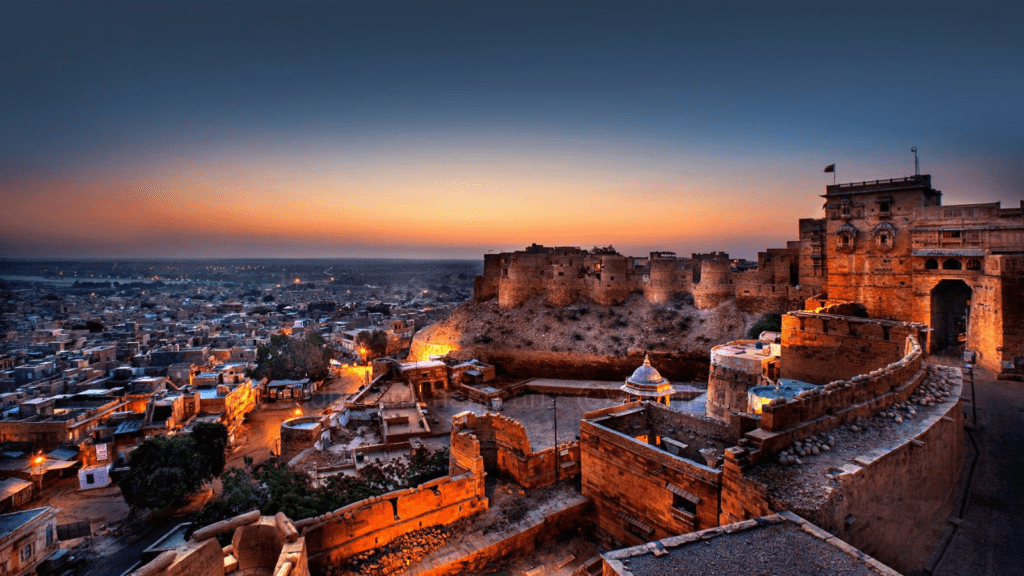
Jaisalmer Fort doesn’t behave like a tourist attraction. Built in 1156, it still functions as a living space. Families cook meals here. Temples ring with prayer. Shops unlock their shutters every morning like they’ve always done.
Walking through the fort feels less like entering history and more like stepping into someone’s everyday life.
You’ll notice small moments if you slow down:
- Doorways being swept clean
- Bells echoing faintly through stone corridors
- Locals greeting each other in passing
- Children navigating lanes instinctively
Inside the fort, a few places quietly stand out.
Jain Temples
Carved with remarkable detail, these temples feel calm and focused. The stonework is intricate without being overwhelming, and the silence encourages you to pause rather than rush through.
Raj Mahal Palace
Less grand than expected, the palace feels practical and lived-in. The balconies offer shaded views of the city below, reminding you how closely connected the rulers once were to everyday life.
Laxminath Temple
This is still a place of worship, not a display. Early mornings feel especially grounded here, before the fort fills with visitors.
Fort Bastions
The walls offer sweeping desert views. Come in the evening and watch the city soften in colour—it’s one of the quiet highlights of Jaisalmer.
The Havelis of Jaisalmer: Built for Climate, Comfort, and Pride
The havelis of Jaisalmer were not built to impress strangers. They were built to last. Merchant families designed them to survive desert heat while reflecting personal identity.
- Thick walls that stay cool
- Balconies that invite breeze
- Courtyards that control light
- Carvings that tell stories
Each haveli feels different, shaped by the people who once lived there.
Patwon Ki Haveli: Detail That Rewards Patience

Patwon Ki Haveli is the most elaborate of them all. Built for five brothers, it feels layered and intricate, almost like it grew outward over time.
Spend a little time here and you’ll notice:
- Endless stone carvings that change with light
- Narrow stairways leading to quiet rooms
- Small windows framing parts of the city
- Everyday objects that hint at merchant life
It’s best visited early, when you can wander without interruption.
Nathmal Ki Haveli: Charm in Its Asymmetry

Nathmal Ki Haveli doesn’t try to be perfect—and that’s exactly why it feels warm. Built by two brothers working separately, its slight imbalance gives it character.
- Uneven but thoughtful design
- Stone elephants guarding the entrance
- Interior artwork influenced by distant cultures
- Spaces that feel human rather than formal
This haveli feels personal, almost conversational.
Salim Singh Ki Haveli: A Statement in Stone
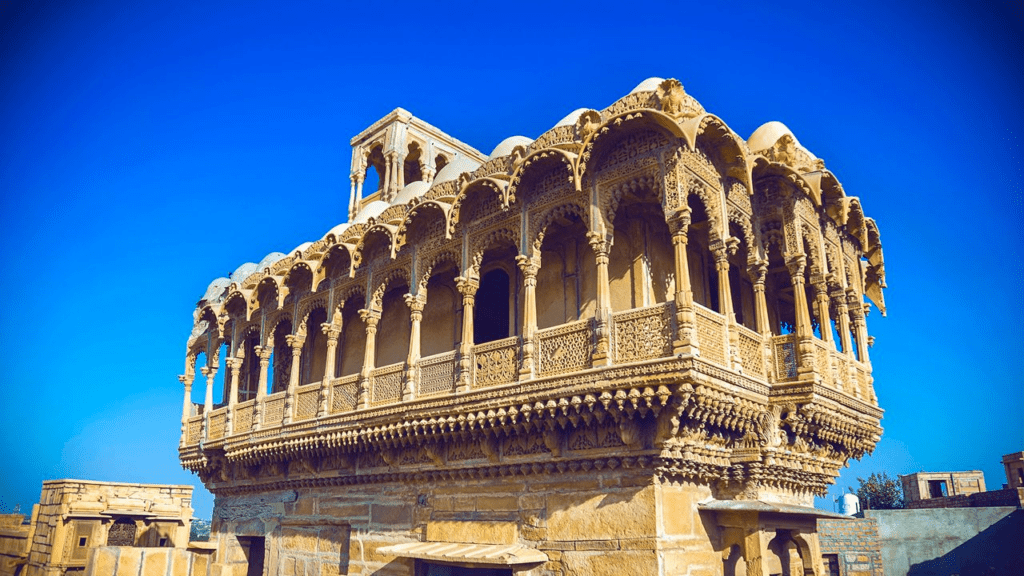
Salim Singh Ki Haveli stands out immediately. Its curved roofline, often compared to a peacock’s tail, rises confidently above the city.
- Balconies projecting boldly outward
- A silhouette visible from afar
- Subtle blue accents among sandstone
- Views that reconnect you visually with the fort
It adds drama to Jaisalmer’s skyline without overpowering it.
Gadisar Lake: A Pause Between Places
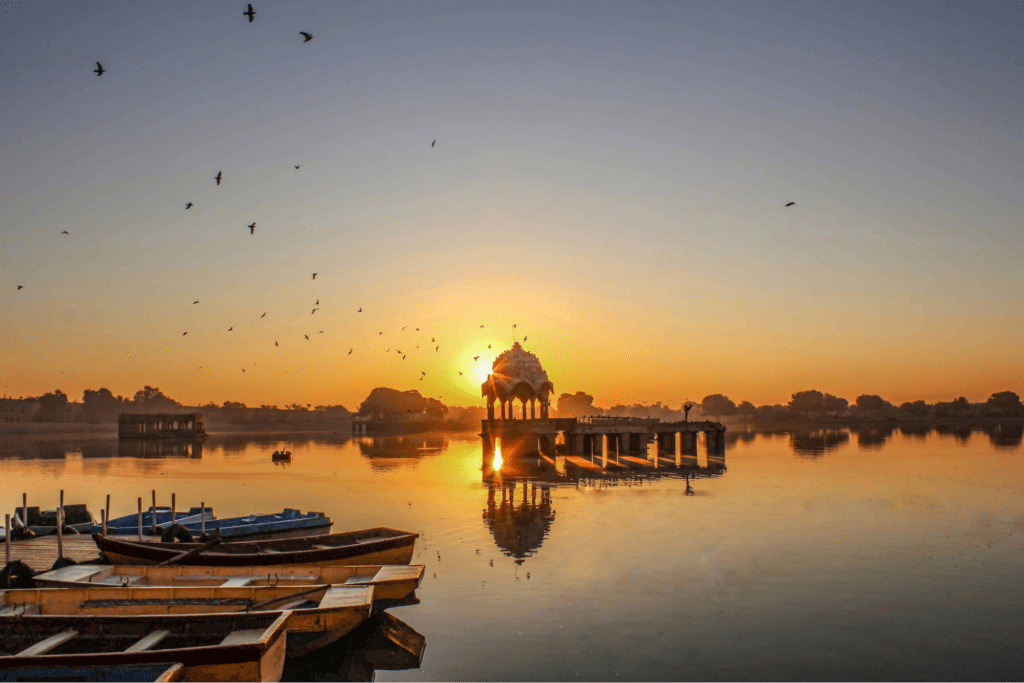
Just outside the old city, Gadisar Lake feels like a natural pause. Once the city’s water source, it now offers a space to slow down.
- Stone steps descending quietly into water
- Shrines scattered along the edges
- Reflections that shift with the sky
- Birds gathering during winter
Early mornings are especially peaceful here, before the city fully wakes up.
Sam Sand Dunes: Letting the Desert Lead
Around 40 kilometres from Jaisalmer, Sam Sand Dunes reveal the desert in its simplest form. There’s nothing competing for attention here—just sand, sky, and time.
A desert safari in Jaisalmer works best when it’s unstructured.
- Camel rides that move at a natural pace
- Jeep drives that stretch into open space
- Evenings shaped by folk music and firelight
- Nights where stars take over completely
Spending a night here changes everything. Mornings are cool, quiet, and expansive. Travellers who prefer understated, nature-focused stays sometimes come across suitable options through curated platforms like Solis Nature, where the emphasis remains on landscape rather than performance.
Bada Bagh: Remembering Without Noise

Bada Bagh holds cenotaphs built for Jaisalmer’s rulers. Surrounded by open land, the site feels reflective rather than ceremonial.
- Carved chhatris standing quietly
- Long shadows in the evening
- Wind carrying sound across open ground
Sunset brings out the warmth in the stone and the stillness of the place.
Kuldhara: Silence With a Story
About 18 kilometres away, Kuldhara sits abandoned. Once home to the Paliwal Brahmins, it was left suddenly, and no single explanation has ever fully settled.
- Empty homes still standing in rows
- Courtyards frozen in time
- Local stories passed down carefully
The village doesn’t try to be mysterious—it simply is.
Staying in Jaisalmer: Matching the Mood
Where you stay shapes how you experience the city.
- Guesthouses inside the fort for early mornings among old walls
- Heritage hotels that preserve traditional design
- Desert stays near Sam for space and quiet
There’s no single right choice—only what feels right for your pace of travel.
Food That Reflects the Desert
Jaisalmer’s food is shaped by restraint and resourcefulness.
- Dal baati churma served warm and filling
- Ker sangri using desert-grown ingredients
- Mirchi vadas and kachoris from street stalls
- Sweets prepared slowly, often seasonally
Meals are meant to be enjoyed without hurry.
Before You Go: A Few Grounded Notes

Jaisalmer is best experienced at a slower pace. Walking works well in the old city, especially inside and around the fort. Trains and flights connect the city conveniently, and comfortable travel is possible without overspending.
For travellers planning a longer journey, this destination fits naturally into broader Rajasthan routes. You can explore more such destinations, planning advice, and regional insights through our Rajasthan travel guide collection, which brings together experiences from across the state.
- Getting there: Trains and flights connect Jaisalmer well
- Getting around: Walking works best in the old city
- Budget: Comfortable travel doesn’t need excess spending
- What to pack: Light clothes, warm layers, sun protection
- Cultural awareness: Modest clothing is appreciated
Jaisalmer isn’t meant to be rushed or consumed quickly. Its forts, havelis, lakes, and dunes reward patience. Among the best places to visit in Jaisalmer, it’s often the quiet walks, unplanned stops, and everyday moments that stay with you the longest—long after the desert dust has settled.
FAQs
How many days are enough to explore Jaisalmer?
Two to three days are usually enough to explore Jaisalmer comfortably. This allows time to walk through Jaisalmer Fort, visit the havelis, spend a quiet morning at Gadisar Lake, and still include a desert experience without rushing.
What kind of activities can you do in Jaisalmer?
Jaisalmer offers a mix of heritage, desert, and everyday experiences. Travellers often enjoy fort walks, haveli visits, desert safaris, sunset viewpoints, and cultural evenings near the dunes. Many visitors also discover lesser-known ideas by browsing activities to do in Jaisalmer shared by fellow travellers, which often highlight experiences beyond the usual tourist trail.
What is Jaisalmer known for?
Jaisalmer is known for its golden sandstone architecture, the living fort that still houses local families, vast desert landscapes, and historic havelis with detailed stone carvings that reflect the city’s trading past.
Is Jaisalmer Fort still inhabited?
Yes, Jaisalmer Fort is still inhabited. Families live inside the fort along with temples, shops, and small businesses, giving it a lived-in, everyday rhythm rather than the feel of a closed monument.
Is Jaisalmer suitable for family travel?
Yes, Jaisalmer is suitable for family travel. The main attractions are easy to navigate, the city feels compact, and there’s enough variety for different age groups. Many families find it helpful to go through practical travel tips for Jaisalmer from real visitors before planning their itinerary.
Can Jaisalmer be part of a Rajasthan itinerary?
Yes, Jaisalmer fits naturally into a Rajasthan itinerary. It complements other heritage destinations in the state and is especially rewarding for travellers interested in desert landscapes, history, and slower forms of travel.
