
Rajasthan’s temples have never existed only for worship. They grew alongside villages, trade routes, and royal towns, quietly absorbing stories of faith, fear, hope, and gratitude. Over time, belief settled into stone, and those stones began to speak. This blog explores the most famous temples in Rajasthan and the legends behind them, focusing on lived faith, local stories, and the human emotions that still shape these sacred spaces.
Most Famous Temples in Rajasthan and the Legends Behind Them: How Faith Became Everyday Life
Long before Rajasthan appeared on travel maps, it lived through oral stories. Temples became places where memory stayed rooted. Many temples that shaped Rajasthan’s history were built during uncertain periods—times of invasion, drought, or political change. Faith offered reassurance, and temples slowly turned into emotional centers of communities.
The history and legends of Rajasthan temples were not preserved only in scriptures. They were repeated at home, discussed during festivals, and remembered through routine acts of worship. That is why the stories behind famous temples in Rajasthan still feel familiar. They were meant to be lived, not displayed. Solis Nature not only got you in list of temples but we also got you covered in the list of stays in Rajasthan.
Khatu Shyam Ji Temple, Sikar

A Story Remembered Through Surrender
Khatu Shyam Ji Temple holds a deeply emotional place among religious places in Rajasthan. Linked to Barbarik from the Mahabharata, the temple is rooted in sacrifice rather than strength.
Legend says Barbarik possessed immense power but chose devotion over victory. When Lord Krishna asked for his head, Barbarik offered it willingly. That moment transformed him into Shyam, a deity worshipped for compassion, faith, and humility.
Even today, many visitors arrive quietly, carrying wishes they rarely express aloud.
What Makes This Temple Different From Others in Rajasthan
- Faith here feels deeply personal
- Long barefoot journeys are common acts of belief
- Bhajans often continue late into the night
Don’t Miss These Hidden Details Inside the Temple
- Silver doors worn smooth by decades of touch
- Unique offerings shaped like moustaches
- The brief stillness before dawn aarti
Among temples in Rajasthan with mythological stories, Khatu Shyam Ji reflects devotion rooted in surrender.
Salasar Balaji Temple, Salasar
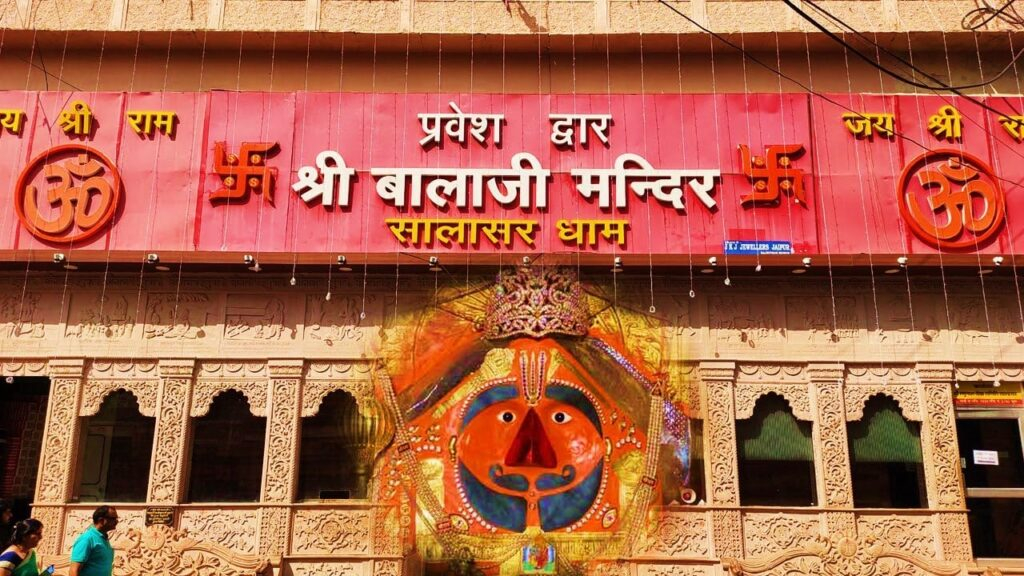
Strength, Discipline, and Unshaken Belief
Salasar Balaji Temple is one of the most visited popular temples in Rajasthan, dedicated to Lord Hanuman. According to local belief, the idol here appeared on its own and was later moved respectfully to Salasar by devoted followers.
The temple became especially important to traders and travelers, who believed Balaji protected journeys and livelihoods. Over time, Salasar developed into a strong center of disciplined devotion.
What These Temples Teach Us About Rajasthan’s Past
- Faith often guided travel and trade
- Protection was sought before progress
Best Months to Visit This Temple Without Crowds
- July to September, outside major fairs
Salasar Balaji stands among famous temples in Rajasthan with history, where belief is tied closely to daily life.
Mehandipur Balaji Temple, Dausa

Where Faith Is Taken Seriously
Mehandipur Balaji Temple is among the most intense sacred temples in Rajasthan. Dedicated to Lord Hanuman, it is known for strict customs and disciplined rituals.
Local belief suggests that Balaji manifested here to protect people from troubles beyond explanation. Over time, silence, order, and restraint became essential to the experience. For some, the visit feels overwhelming. For others, it brings relief and clarity.
Why Rajasthan’s Temples Are Best Experienced Through Their Stories
- Rituals make sense when their origins are known
- Legends explain the seriousness of practices
Best Time of Day to Visit This Temple for Peace & Darshan
- Early afternoon, once main rituals settle
This temple is counted among ancient temples in Rajasthan with legends, where faith addresses unseen fears.
Dilwara Temples, Mount Abu

When Patience Became Prayer
Dilwara Temples are among the finest ancient temples in Rajasthan. Built by Jain patrons, these marble temples reflect restraint, patience, and quiet devotion.
Local stories suggest craftsmen treated each carving as an offering. Years were spent on single ceilings or pillars, not for recognition, but for discipline.
What These Temples Teach Us About Rajasthan’s Past
- Simplicity was valued over display
- Silence was part of worship
Don’t Miss These Hidden Details Inside the Temple
- Ceilings shaped like unfolding flowers
- Pillars with no repeated patterns
- Soft natural light shifting through halls
These historic temples in Rajasthan show how faith shaped art.
Brahma Temple, Pushkar
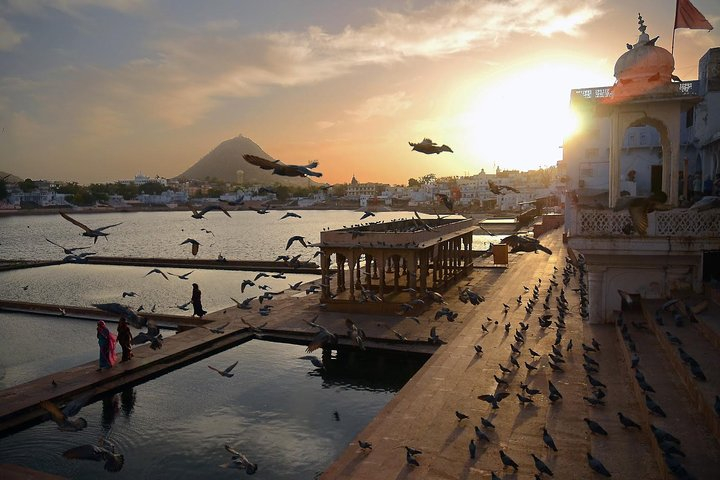
A God with One Sacred Home
Brahma Temple remains one of the few temples dedicated to Lord Brahma, making it one of the most important must visit temples in Rajasthan.
Legend says a delayed ritual angered Goddess Savitri, resulting in a curse that limited Brahma’s worship. Pushkar became his primary place of devotion.
What Locals Usually Do After Praying Here
- Walk quietly to Pushkar Lake
- Offer flowers at the ghats
- Sit silently near the water
This temple remains central to the stories behind famous temples in Rajasthan.
Govind Dev Ji Temple, Jaipur

Faith That Sets the City’s Rhythm
Located within Jaipur’s City Palace, Govind Dev Ji Temple reflects devotion woven seamlessly into everyday routine. The idol is believed to closely resemble Lord Krishna’s living form, making the connection deeply personal for devotees. Govind Dev ji is more on the main city side of Jaipur and if you are looking for exploring Jaipur then you should check out top 10 things to do in Jaipur.
Unlike many temples that feel separate from city life, Govind Dev Ji quietly controls Jaipur’s pace. Daily schedules, shop openings, and even traffic patterns subtly follow temple timings.
What Makes This Temple Different From Others in Rajasthan
- Darshan timings shape the daily rhythm of the city
- The temple sits inside a royal palace, blending royalty with devotion
- Worship here feels intimate rather than ceremonial
Don’t Miss These Hidden Details Inside the Temple
- The idol’s expressive eyes during shringar darshan
- Soft chanting that fills the palace corridors
- The calm pause just before evening aarti
What Locals Usually Do After Praying Here
- Sit quietly within the palace complex
- Visit nearby markets after morning darshan
- Return in the evening for aarti
It remains one of the most loved best temples to visit in Rajasthan, where faith quietly directs daily life.
Eklingji Temple, Udaipur

Where God Ruled Before Kings
Eklingji Temple represents a rare belief system where the kingdom belonged to Lord Shiva. The rulers of Mewar governed not as kings, but as caretakers of the deity’s land.
This temple was never just a religious space. It influenced political decisions, royal duties, and moral responsibility.
Walking Through History: Temples That Shaped the Region
- Kings took oaths here before coronation
- Important decisions followed prayer, not impulse
- Power was linked with accountability
What Makes This Temple Different From Others in Rajasthan
- The deity, not the ruler, was considered sovereign
- Worship and governance were deeply connected
Best Time of Day to Visit This Temple for Peace & Darshan
- Early morning hours when rituals are calm and focused
Eklingji remains among the most respected historic temples in Rajasthan, where faith once guided an entire kingdom.
Karni Mata Temple, Deshnok
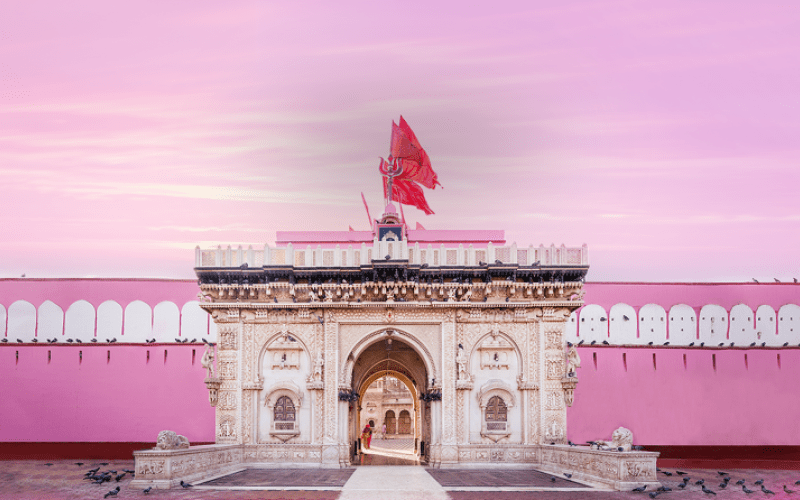
When Belief Changes Perspective
Karni Mata Temple is one of the most unusual Rajasthan famous temples, known for thousands of sacred rats that roam freely within the complex. These rats are believed to be reincarnated devotees of Karni Mata.
For first-time visitors, the experience may feel surprising. For devotees, it reflects complete trust and acceptance.
What Makes This Temple Different From Others in Rajasthan
- Faith replaces fear and discomfort
- Walking barefoot among sacred rats is considered auspicious
- A white rat sighting is believed to bring blessings
Don’t Miss These Hidden Details Inside the Temple
- Feeding areas carefully maintained by devotees
- Silver doors gifted by royal patrons
- The respectful silence despite constant movement
Why Rajasthan’s Temples Are Best Experienced Through Their Stories
- Without the legend, rituals feel confusing
- With the story, devotion becomes understandable
It stands among temples in Rajasthan with mythological stories that challenge how belief is usually understood.
Galtaji Temple, Jaipur

Where Water and Worship Meet
Galtaji Temple rests quietly within the Aravalli hills, far from Jaipur’s busy streets. Natural water tanks here are believed to never dry, even during extreme summers.
The temple complex feels open and calm, with water, prayer, and nature blending naturally.
What Makes This Temple Different From Others in Rajasthan
- Natural water sources are central to worship
- Open-air setting creates a meditative atmosphere
- Monkeys are treated as part of temple life
Best Time of Day to Visit This Temple for Peace & Darshan
- Early mornings, when sunlight touches the water tanks
- Before tourist crowds arrive
What Locals Usually Do After Praying Here
- Sit near the kunds in silence
- Feed monkeys as part of ritual belief
It remains one of the most serene must visit temples in Rajasthan, especially for travelers seeking calm.
Why These Temples Still Matter
The most famous temples in Rajasthan and the legends behind them offer more than architecture. They offer understanding. Stories explain rituals, customs, and the emotional bond locals share with these spaces.
For mindful travel platforms like Solis Nature, these temples align naturally with slow, meaningful journeys—where observation matters more than speed.
What Makes This Journey Special
- Explores temples that shaped Rajasthan’s history through lived belief
- Highlights popular temples in Rajasthan beyond surface tourism
- Connects mythology with everyday routine
Encourages calm, respectful exploration
Conclusion: Where Stories Continue Quietly
The most famous temples in Rajasthan and the legends behind them are not frozen in time. They live through prayer, habit, and shared memory. When visited patiently, these temples turn travel into reflection—an experience that mirrors the mindful philosophy of Solis Nature. If you are looking for references to plan your next Rajasthan trip then Solis Nature’s Rajasthan Tour Guide got you covered.
FAQs — Most Famous Temples in Rajasthan and the Legends Behind Them
1. Why are temples such an important part of Rajasthan’s culture and history?
Rajasthan’s temples are more than religious sites — they reflect local mythology, ancient power structures, regional folklore, and lived traditions. Many temples grew alongside towns and trade routes, becoming centers of social life, local governance, and community identity over centuries. Travelers often describe temple visits as places where history and human stories merge.
Many Quora readers have some really insightful thoughts on this.
2. Are the legends associated with temples in Rajasthan real or mythological?
Most temple legends in Rajasthan blend history and mythology. For example, stories about Khatu Shyam Ji and Barbarik come from Mahabharata lore, while the tale of Brahma Temple in Pushkar is rooted in regional belief systems. These stories might not be historically verifiable, but they are culturally authentic and deeply meaningful to local devotees.
3. What is the best time to visit temples in Rajasthan for calm and fewer crowds?
Most travelers recommend:
- Early mornings: Peaceful darshan and cooler temperatures
- Weekdays: Avoid weekend tourist rush
- Non-festival months: Avoid peak pilgrimage seasons (like Navratri for some temples)
Temples like Galtaji and Dilwara are especially serene early in the day.
4. Are there unusual temple rituals in Rajasthan unlike anywhere else?
Yes — Rajasthan’s temples often incorporate regional customs. For example:
- At Karni Mata Temple, rats are revered as sacred
- Mehandipur Balaji Temple has strict discipline and rituals
- Khatu Shyam Ji sees barefoot pilgrimages and dedicated bhajans late into the night
These practices reflect local belief systems, not uniform pan-Indian temple customs.
5. Do temple visits offer more than just religious experience?
Yes. Rajasthan temple visits often combine:
- Cultural learning (local art, festivals, architecture)
- Historical insight (dynastic links and regional power narratives)
- Community interaction (with priests, artisans, pilgrims)
Temples like Eklingji influenced governance historically, while Govind Dev Ji Temple shapes everyday life rhythms in Jaipur.
6. Are these temples suitable for first-time travelers?
Yes — most famous Rajasthan temples welcome visitors of all backgrounds. However, respectful dress and behavior are expected. Early morning visits and quieter hours make the spiritual and architectural experience richer.