One November morning in Delhi: a grey film over the city, the throat a little raw from smoke, a number on your phone that makes you frown — AQI 420. You pull down the window, and it smells like burnt fields and diesel. You think: enough. And so with the increase in Delhi air pollution when you are looking for escapes.
Go south. Go to Kerala.
This isn’t a brochure line. It’s exactly what happens the minute you step out of the airport. The air changes. The sky looks farther away. Your chest relaxes. It’s not dramatized — it’s real. When you check the AQI in Delhi vs Kerala, you will be baffled.
The air difference is immediate
In November, while Delhi’s AQI spikes, Kerala’s mornings often sit in the low 40s or 50s. That gap is not subtle. It’s the difference between coughing on the metro and waking up to a humid, salty breeze. You’ll notice it in the first 10 minutes: no sting in the eyes, no scratch at the back of the throat. Just clean air. Really clean air.
Backwaters that slow you down
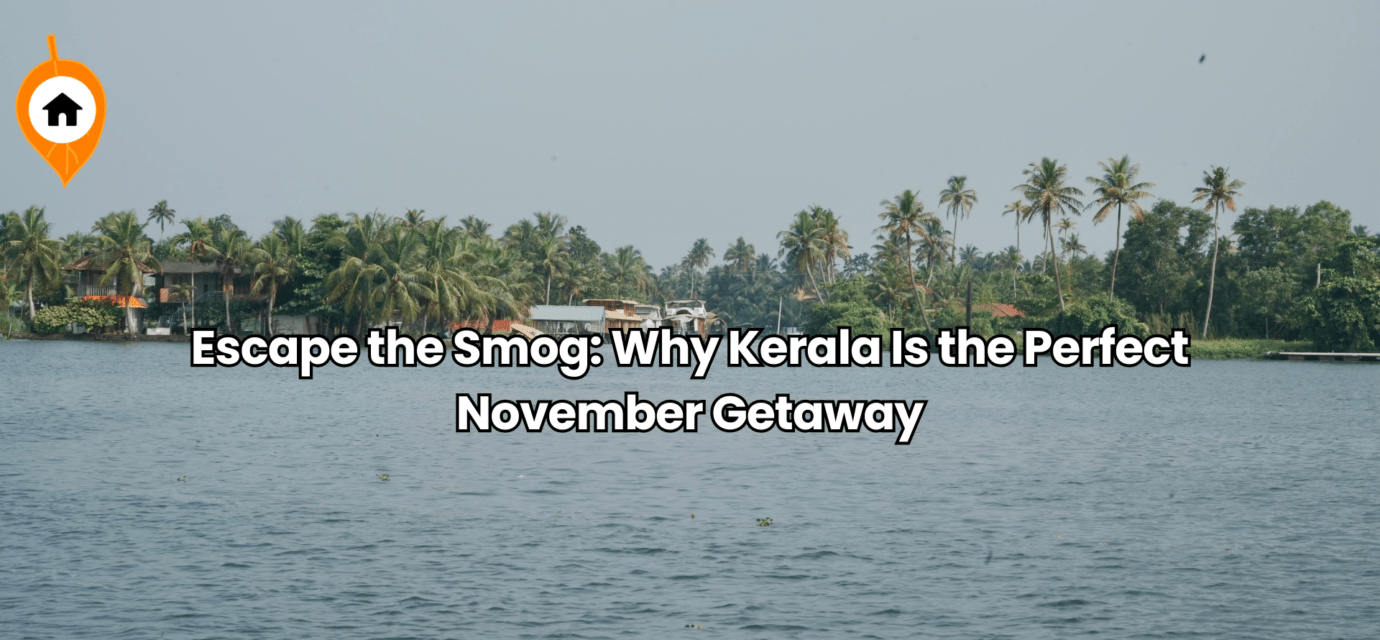
Alleppey’s backwaters don’t rush. They drift. Take a kettuvallam — an old houseboat — and you’ll feel the pace change. Fishermen pass in tiny boats. Women wash clothes in the shallows. Kids play on the banks. At dusk, lamps pop on along the shoreline like small planets.
Dinner on the boat is humble and perfect: karimeen, rice, coconut curry. No flashing lights, no background noise, just the small slap of the oars. You look up and the stars are back. It’s almost offensive how restorative it feels.
Munnar — tea fields and mist
The road to Munnar peels off the ordinary. Turn after turn, tea gardens climb the hills. Mornings arrive in mist; you can see it rolling between rows of tea like slow smoke. Sit at a small estate stall with the workers. Drink tea fresh from the leaves. They’ll tell you what the seasons mean. You’ll listen because it’s calm enough to.
Solis Nature lists a handful of small cottages in Munnar — no marble lobbies, just verandas, birds, and proper quiet. If silence is a currency, Munnar pays well.
Beaches that feel private
Kerala’s coast is long — 500+ km — but it rarely feels overcrowded. At Varkala, cliffs tumble into the sea, cafes perch on the edge, and people disappear into the water until sunset. Kovalam has its charm; Marari keeps its mornings quiet. Walk the shore at dawn. You’ll see fishermen pull nets. You’ll find shells. You’ll not be bothered.
Ayurveda that actually resets you
This isn’t Instagram wellness. It’s crude, soft, effective. Warm herbal oils. Deep but gentle massages. Early nights. Try a three-day program in Thrissur or Palakkad and notice how sleep comes back. By day three, your skin looks better. By day four, you breathe differently. It’s slow medicine — and it works.
Food that stops being just food
A banana-leaf meal is not a gimmick. It’s a sequence. Appam that folds like a pillow. Sambar that smells like heat and home. Avial, chutneys, seafood fresh enough that you forget convenience food exists. Try toddy if you’re curious — slightly sweet, slightly sharp — and you’ll feel a local evening in one glass.
November is the sweet spot
Post-monsoon, pre-peak tourist season. Rivers still full. Tea gardens glossy. Bird numbers swell at Kumarakom. The weather is tidy: cool mornings, warmish afternoons. Flights are easier to book than in December. Houseboats are not fully booked. For anyone fleeing Delhi’s choking air, it’s a small miracle.
People and culture — the quiet warmth
Kerala isn’t just landscape. It’s hands that help when you’re lost, strangers who hand you a cup of tea, vendors who proudly show the spices they sell. Walk through Kochi’s spice market and the air smells of pepper and cardamom. Watch a temple festival and you’ll see elephants, drums, color — but also a crowd that treats celebration like family time, not a spectacle.
You come back different
This is the truest thing: a short trip here changes how you handle the city when you return. You cough less. You sleep deeper. Your stomach remembers proper food. Your idea of hurry shrinks. You carry that calm with you, stubborn as a souvenir. And November can be the best time to visit Kerala.
If planning feels like too much, Solis Nature curates stays that keep things simple — small eco cottages, houseboats, homestays that feel local and honest. No shiny overstated hotels. Just places that match the mood. And if you want a full Kerala Tour Guide then also check out Solis Nature.
FAQs:
1. Why is Kerala ideal for a November vacation?
Because it’s one of the few Indian states where the air remains clean, the weather pleasant, and the landscapes lush right after the monsoon.
2. What are some must-visit places in Kerala for nature lovers?
Alleppey for houseboats, Munnar for tea gardens, Varkala for cliffs and beaches, and Wayanad for forests and waterfalls.
3. Where can I book nature-centric stays in Kerala?
You can explore curated eco stays and houseboats through Solis Nature’s Kerala collection (interlink to Kerala property listings).